
Beyond GG: A Comprehensive Guide to Navigating H, HH, J, K, and L Cups
Stop Guessing Your Size
Use our international bra size calculator to find your perfect fit in seconds.
Beyond GG: Navigating H, HH, J, K, and L Cups
Welcome to the definitive, unapologetic guide for navigating the world of truly full-bust lingerie. If you have moved beyond the GG cup and are exploring the realms of an H cup bra size, a double H bra size (HH), or even venturing into a K cup bra size or L cup size, you already know the high-street retail market has failed you.
Finding the perfect bra in these sizes is not simply a matter of aesthetics—it is an exercise in architectural brilliance, ergonomic engineering, and supreme daily comfort. For many women, realizing they need an HH bra size or larger is a revelation. Suddenly, years of physical discomfort, digging straps, neck pain, and completely inadequate support make sense. You were not "too big" for a bra; you were simply wearing garments that were never engineered to support your unique volume.
Let us delve deeply into the mathematics of what these sizes truly mean, the structural requirements for lifting heavy breast tissue, and how you can achieve unparalleled comfort and a stunning silhouette without compromise.
The Mathematics of Maximum Volume
Before we discuss the architecture of the garments, we must understand the math. The letter of your cup size is not an arbitrary label; it is a strict mathematical differential. It represents the exact difference in inches between your snug underbust measurement (your ribcage) and your fullest overbust measurement.
When we look beyond the GG cup, we are looking at differentials that require significant volume encapsulation. The UK sizing system is globally recognized as the gold standard for full-bust sizing because of its logical, consistent progression.
The UK Full-Bust Sizing Matrix
Here is a breakdown of what these larger sizes mathematically represent in the UK sizing system:
| UK Cup Size | Differential (Overbust minus Underbust) | Equivalent US Size (Approximate) |
|---|---|---|
| G | 9 inches | I |
| GG | 10 inches | J |
| H | 11 inches | K |
| HH | 12 inches | L |
| J | 13 inches | M |
| JJ | 14 inches | N |
| K | 15 inches | O |
| KK | 16 inches | P |
| L | 17 inches | Q |
As the matrix shows, an H cup bra size denotes an 11-inch difference between the ribcage and the bust. Moving into the hyper-full volume range, an L cup size indicates a 17-inch difference.
Understanding this mathematical relationship is the first step toward finding a garment that feels tailor-made. If you measure a 34-inch underbust and a 46-inch overbust, the 12-inch differential mathematically dictates a 34HH (UK). Knowing this number empowers you to bypass the uneducated fitters in department stores.
The Architecture of Full-Bust Bras
When designing bras for an H cup bra size and beyond, manufacturers cannot simply take a pattern for a 36C and scale it up. The physics of heavy breast tissue demand a completely different approach to garment engineering.
The structural integrity required for a K cup bra size or an L cup size is immense. The bra must distribute the weight of the breast tissue evenly across the torso, anchoring it to the ribcage and saving your delicate shoulder and neck muscles from bearing the load.
When shopping in the H+ range, you must demand the following architectural features:
1. Power-Mesh Wings and a Wide Band
The band is responsible for 90% of the bra’s support. In an H, HH, or J cup, a flimsy lace band will immediately stretch out, ride up the back, and fail. Look for "wings" (the side panels of the band) constructed from heavy-duty power-mesh or double-lined spandex. The band itself should be wider, typically utilizing three or four hook-and-eye closures in the back to disperse the tension over a larger surface area of the back.
2. Multi-Part, Cut-and-Sewn Cups
Molded foam cups (the seamless "T-shirt bras" you see everywhere) physically cannot be molded deep enough to encapsulate an HH or K cup without becoming incredibly wide and shallow. To achieve the necessary depth and projection forward, full-bust bras utilize "cut-and-sewn" cups. These cups are constructed from three to five distinct panels of fabric sewn together. The seams act as structural struts:
- The Bottom Cup: Provides the heavy lifting from underneath.
- The Top Cup: Often made of stretch lace to accommodate slight fluctuations in size or asymmetry.
- The Side Sling: A crucial panel on the outer edge of the cup that pushes the breast tissue forward, preventing it from migrating into your armpits and creating a slimming, projected profile.
3. Reinforced, Narrow-to-Medium Underwires
The underwire must be strong enough to resist the immense forward pull of heavy tissue without warping or snapping. Furthermore, many women in the H-L cup range have highly projected breasts with relatively narrow breast roots. If the underwire is too wide, it will wrap around to the back of the armpit, causing severe pain and failing to support the tissue from the front. Polish brands (like Ewa Michalak) are particularly famous for engineering incredibly deep cups with narrow, strong wires.
4. Fully Adjustable, Centered Straps
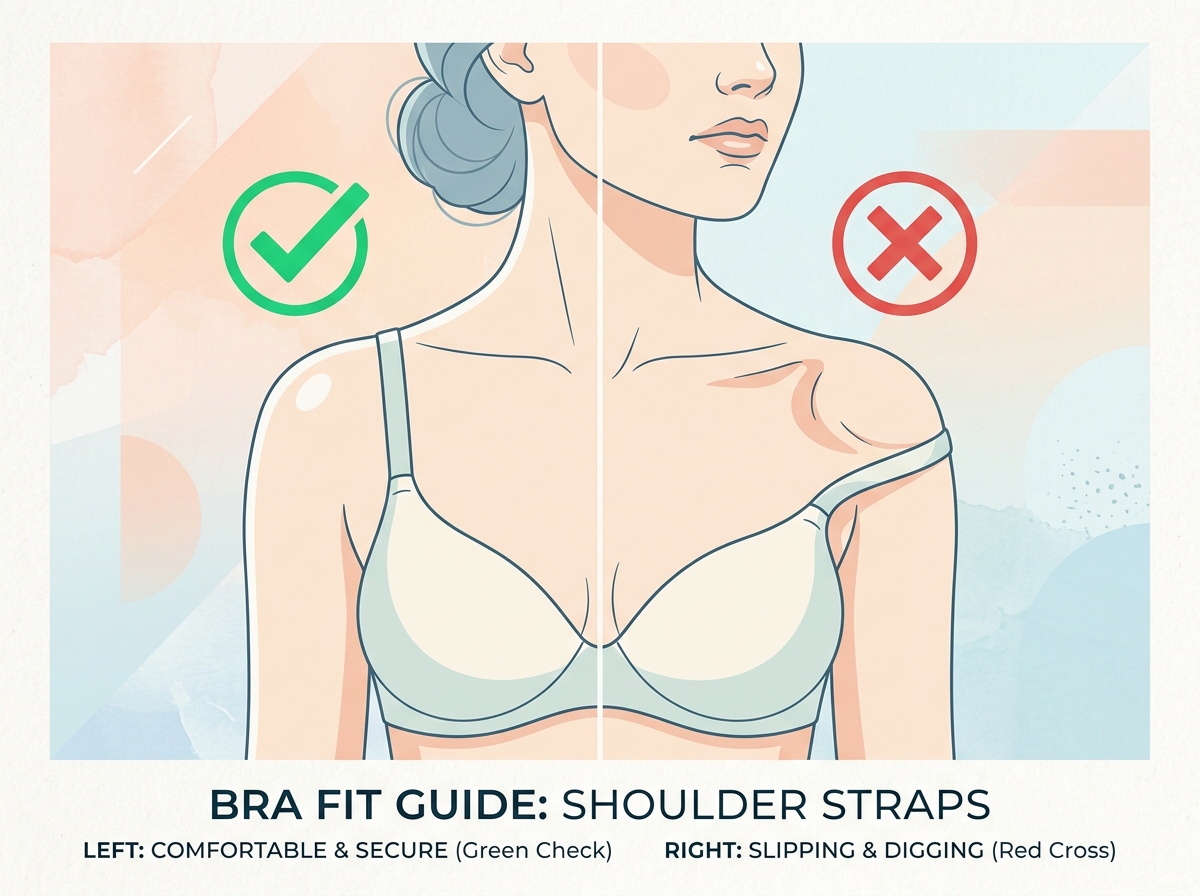
Because the band does the heavy lifting, the straps simply keep the cup flush to the body. However, due to the heavy volume, thin straps will still dig in. Look for fully adjustable, moderately wide straps. Crucially, look for styles (like balconettes or full-cups) where the straps are attached closer to the center of the cup, rather than the extreme outer edge, to prevent them from slipping off the shoulders.
The Myth of the “Huge” Cup
One of the most pervasive, damaging myths in lingerie is that a double H bra size or a K cup bra size looks objectively "freakish" or enormous. This stems from a societal misunderstanding of how bra sizing works.
Cup volume is strictly relative to band size. A 28H (which belongs to a very petite, slender woman with a full bust) contains significantly less absolute volume than a 44H (which belongs to a plus-size woman with a full bust).
The cup letter merely denotes a ratio. When a 30J is properly fitted into a well-engineered cut-and-sewn bra, the tissue is lifted off the ribcage and projected forward. This elongates the torso, defines the waist, and creates a beautiful, proportionate silhouette. Proper support often makes the breasts look smaller and more contained than they do when spilling out of a poorly fitted 36DDD.
Diagnosing Fit Issues in H+ Sizes
Even with the correct mathematical size, you must ensure the garment interacts correctly with your specific breast shape. Watch for these common fit failures:
- The Floating Gore: The "gore" is the center panel connecting the cups. In an underwired bra, it must tack completely flat against your sternum. If the gore floats away from your chest, the cups are simply too small to contain your volume. You must size up (e.g., from an HH to a J).
- The Quad-Boob (Spillage): If tissue is spilling over the top edge of the cup after you "scoop and swoop" (pulling all tissue from your underarm into the cup), the cup is too small.
- Underwire Digging in the Armpit: If the wire is poking your armpit, the cup might be too small, or the wires might be too wide for your breast root.
- The Band Riding Up: If the back band sits higher than the underwires in the front, the band is too large. It cannot grip your ribcage, forcing your straps to carry the weight. Size down in the band and up in the cup (e.g., move from a 36HH to a 34J).
Embrace Your Size, Demand Support
Your bra size is a metric, not an identity, and certainly not a flaw. Whether you require an H cup bra size, an intricate double H bra size, or the structural masterpiece of an L cup size, you deserve lingerie that makes you feel exquisite, secure, and physically comfortable.
The journey to the perfect fit might require some trial and error, and it will almost certainly require shopping online from specialized boutiques rather than mall department stores. However, the destination—a world of absolute comfort, perfect posture, and elegant style—is profoundly worth the effort.
Stop Guessing, Start Calculating
Finding your perfect fit in the H-L cup range shouldn’t be a mystery left to trial and error. Empower yourself with your mathematically correct size.
Use our advanced Bra Size Calculator to bypass retail confusion and discover your scientifically accurate starting point. If you need to tweak the fit of a band but want to maintain your heavy-duty cup volume, explore your options with our Sister Size Calculator to find a fit that feels flawlessly custom-tailored to your unique shape.
Why Proper Fit Matters
Wearing a bra that fits correctly provides reliable daily support and all-day comfort. A well-fitted band takes the weight off your shoulders, prevents slipping or digging straps, and ensures your garments sit smoothly against your body.
Because body measurements and bra sizing matrices vary across different manufacturers, learning how to measure your bra size accurately is the most dependable way to establish your baseline. If your current bra feels uncomfortable, browse our bra fit diagnostic guide for common solutions.