
Small Band, Large Cup: Navigating Unique Proportions
Stop Guessing Your Size
Use our international bra size calculator to find your perfect fit in seconds.
Small Band, Large Cup: Navigating Unique Proportions
In the realm of premium lingerie, catering to unique body proportions is the hallmark of true garment craftsmanship. For decades, the mainstream market has catered strictly to the middle of the bell curve—often referred to as the "matrix sizes" (32-38 A-DD)—ignoring the vast number of women whose beautiful, natural proportions fall completely outside this artificially limited range.
One of the most common—yet historically underserved and misunderstood—demographics in the lingerie world is the "small band, large cup" profile. A small underbust combined with a voluminous overbust presents a distinct engineering challenge. Understanding these unique proportions, why mainstream sizing fails them, and how to source expertly engineered garments is the key to unlocking extraordinary comfort, a flawless silhouette, and a pain-free daily experience.
The Misunderstood Matrix: Why the High Street Fails You
Mainstream retailers and mall brands are highly motivated by profit margins. It is cheaper to mass-produce a limited size range, typically running from a 32 to 38 band and an A to DD cup. This artificial limitation has created massive, global confusion regarding what actually constitutes big bra sizes UK and small bra sizes UK.
When a woman with a slender ribcage and full bust walks into a standard department store, she is almost always incorrectly fitted. Because the store does not carry her true size, the sales associate will employ outdated, incorrect mathematical methods to force her into a size they sell.
The +4 Method Disaster
If a woman measures 28 inches tightly around her underbust and 37 inches around her fullest bust, her mathematically correct UK size is a 28G (a 9-inch difference).
However, a mall fitter will take that 28-inch underbust, add 4 inches to it (the dreaded +4 method), and tell her she is a 32 band. To compensate for the severe lack of cup volume, they might put her in a 32DD or 32DDD.
The resulting fit is a structural nightmare:
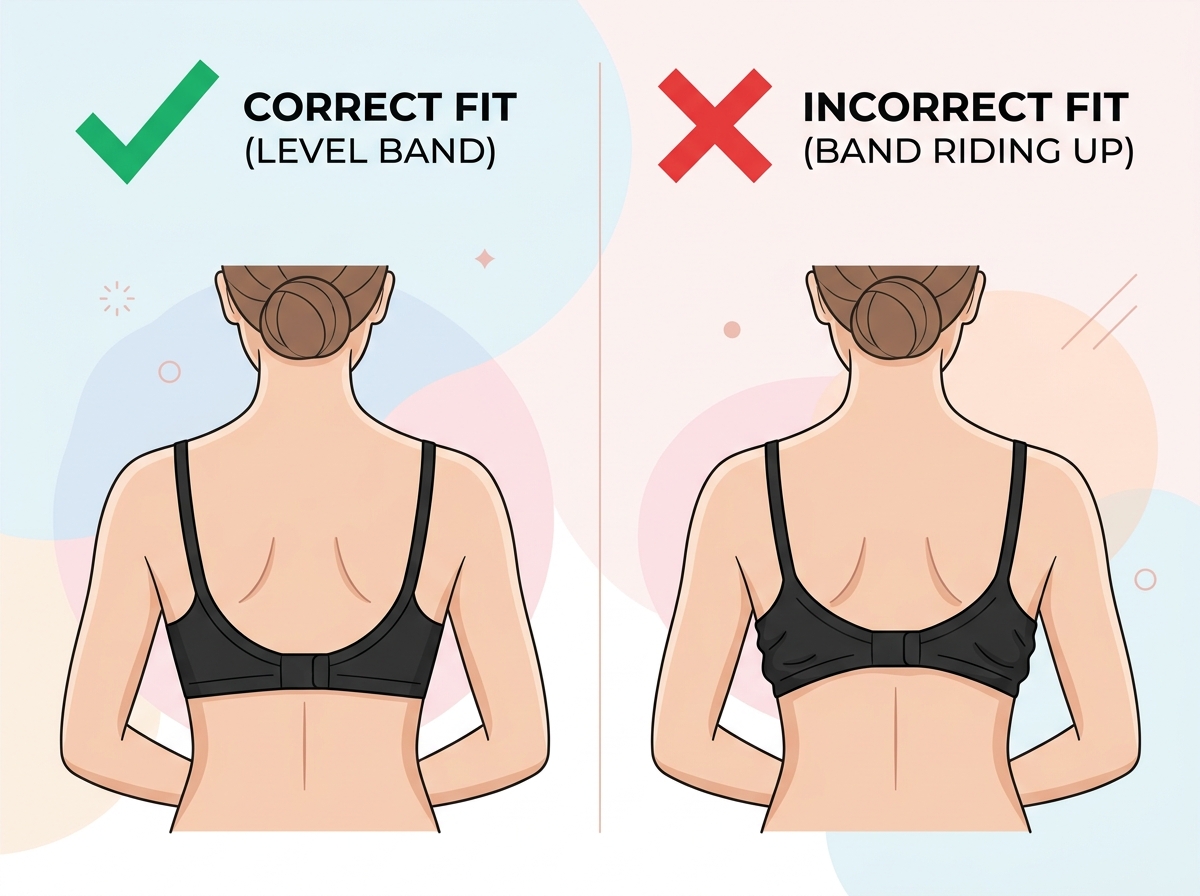
- Zero Support: The 32-inch band is physically larger than her 28-inch ribcage. It will immediately ride up her back between her shoulder blades, providing absolutely zero foundation.
- Severe Shoulder Pain: Because the band has failed, the entire weight of a heavy bust is transferred directly to the shoulder straps. The straps will dig painfully into the trapezius muscles, causing red indentations, neck pain, and even tension headaches.
- Tissue Migration and Spillage: The cups will be simultaneously too wide at the sides and too shallow in the front, causing breast tissue to spill out the center or be aggressively compressed against the chest wall.
If this scenario sounds familiar, you have a small band and a large cup, and it is time to embrace your true proportions.
Decoding the 32FF and 32GG
To understand how normal and beautifully proportionate this body type is, let’s examine some specific, highly sought-after sizes that exemplify the small band/large cup profile.
The 32FF Bra Size
The 32FF bra size is an incredibly common size for slim-to-average women with a naturally full bust. In the UK sizing system, an FF cup does not mean "gargantuan." It precisely indicates an 8-inch difference between the ribcage and the full bust measurement.
Because the band is a 32, the physical width of the breast root is often quite narrow, while the tissue is highly projected forward. This volume is elegantly concentrated, requiring deep, projected cups with narrow underwires that perfectly trace the breast root without poking aggressively into the armpits. A woman wearing a true 32FF often looks, to the untrained eye, like a "C or D cup" because the volume is carried on a smaller frame.
The 32GG Bra Size and Global Conversion
Moving slightly up the volume spectrum, a 32GG represents a 10-inch difference between the ribcage and the bust.
When shopping internationally, converting this size can feel daunting. A frequent question is: What is a 32gg in European size? In standard EU sizing, the progression of cup volume operates on a different mathematical formula. While the UK system advances by 1-inch increments, the standard EU system advances by 2-centimeter increments per cup letter, completely skipping the double letters (DD, FF, GG). Therefore, a UK 32GG translates directly to an EU 70J. Knowing these conversions is absolutely essential, as it allows you to access premium Polish and French luxury brands that excel in full-bust, narrow-band engineering.
Engineering for Support: More Than Just Scaling Down
Designing a bra for small bra sizes UK (in terms of band) combined with big bra sizes UK (in terms of cup) requires advanced garment engineering and a deep understanding of physics. You cannot simply take a pattern for a 36D, shrink the band, and call it a 28G. The geometry of the body changes entirely.
When searching for the perfect garment, you must look for specific structural features engineered for your unique proportions:
1. Power Mesh Wings
The "wings" are the side panels of the bra that wrap around your torso to form the band. For a small band/large cup profile, these wings must be constructed from firm, highly durable "power mesh." Weak, overly stretchy lace bands cannot grip a small ribcage firmly enough to support a heavy bust. The band must anchor securely and resist the immense forward pull of the cups.
2. Multi-Part, Cut-and-Sewn Cups
Molded foam cups (the classic seamless "T-shirt bra") rarely work well for small band/large cup profiles. Foam simply cannot be molded deep enough to accommodate heavy projection on a narrow wire. Instead, you need "cut-and-sewn" cups. These cups are constructed from three or four distinct panels of fabric sewn together. The seams act as architectural struts, lifting the heavy tissue up and pushing it forward, resulting in superior uplift and a projected, rather than flattened, shape.
3. Narrow, Strong Underwires
Women with small ribcages naturally have less horizontal real estate on their chest wall. Therefore, their breast roots are often narrower. Standard bras use wires that are too wide, resulting in the wire sitting painfully under the armpit. Premium full-bust brands design specifically narrow, U-shaped wires that spring strongly against the sternum (the "gore") while perfectly encapsulating narrow roots.
4. Fully Adjustable Straps
Women with smaller band sizes frequently have more petite frames and shorter torsos. Fully adjustable straps (where the slider can move from the back of the band all the way to the top of the cup) are mandatory. Bras with only half-adjustable straps will often be too long, rendering the straps useless and causing them to constantly slip off the shoulders.
A Matrix of Unique Proportions
To help visualize how these sizes translate across different sizing systems, here is a quick reference matrix for common small band/large cup sizes:
| UK Size | EU Equivalent | US Equivalent | Inch Difference (Band to Bust) | Body Type Profile |
|---|---|---|---|---|
| 28G | 60I | 28I | 9 inches | Very petite ribcage, highly projected bust |
| 30FF | 65H | 30H | 8 inches | Petite ribcage, full projected bust |
| 32FF | 70H | 32H | 8 inches | Slim ribcage, full bust |
| 32GG | 70J | 32J | 10 inches | Slim ribcage, very full and heavy bust |
| 34H | 75K | 34K | 11 inches | Average ribcage, exceptionally voluminous bust |
Embracing the Luxury of Proper Engineering
Realizing that you fall into the small band, large cup demographic is often a moment of immense relief for many women. It explains years of physical discomfort, agonizing shopping trips, and clothes that never seemed to fit correctly. The problem was never your body; the problem was that you were trying to force a uniquely beautiful shape into a mass-produced, mathematically incorrect garment.
Embracing your true proportions is a powerful act of self-care. By seeking out specialized, premium brands that cater specifically to the small band/large cup demographic, you are investing in garments that are scientifically designed to support, lift, and celebrate your natural shape in absolute luxury.
Stop Guessing, Start Calculating
Your journey to finding garments engineered specifically for your unique proportions begins with knowing your true mathematical size.
Use our advanced Bra Size Calculator to bypass the outdated retail sizing methods and discover your scientifically accurate starting point. If you need to troubleshoot a specific fit issue, explore how volume translates across bands with our Sister Size Calculator to find a fit that feels flawlessly custom-tailored to your beautiful, unique shape.
Why Proper Fit Matters
Wearing a bra that fits correctly provides reliable daily support and all-day comfort. A well-fitted band takes the weight off your shoulders, prevents slipping or digging straps, and ensures your garments sit smoothly against your body.
Because body measurements and bra sizing matrices vary across different manufacturers, learning how to measure your bra size accurately is the most dependable way to establish your baseline. If your current bra feels uncomfortable, browse our bra fit diagnostic guide for common solutions.